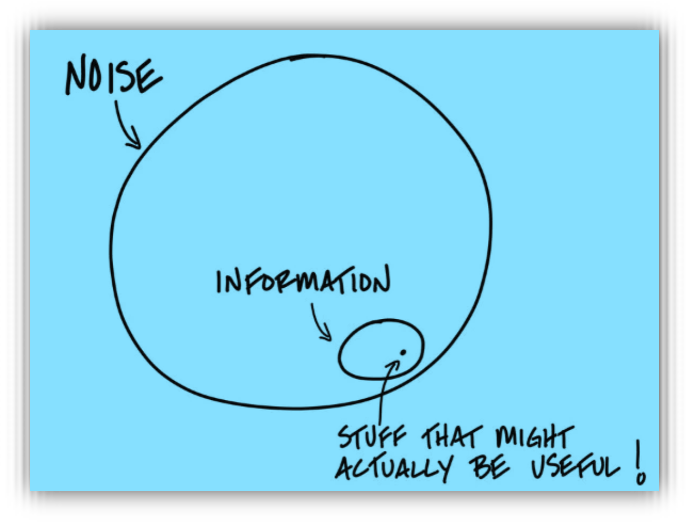
How Much Does The Noise Cost You Every Year?
Economizer Red Zone Special Edition #52226

Last week’s article we touched on some of the concerns we all face with the Social Security trust fund running out of money Like the close to 25% cut in benefits.
One of my solutions is started to save more and one of the best ways to save is to control your investment expenses. Way too many of my boomer cohort are massively overpaying investment fees.
In my 43 plus years’ experience as an accountant and planner, I have seen millions going into the hands of investment companies and advisors with little or no overall benefit.
I was reading one of the many trade journals and ran across an interesting ad/ article. The sad part was the article used a quote that was so far out of context it was scary.
Here is the quote that was used:
Research from Vanguard shows that working with a financial advisor can add about 3% to net returns over time. That difference can become substantial. For example, if you started with a $50,000 portfolio, professional guidance could mean more than $1.3 million in additional growth over 30 years, depending on market conditions and your investment strategy.
I was floored how can they get away with that using that quote which when you read the rest of the Vanguard’s study you will believe it is a very misleading statement.
Why is it so bizarre? The basic premise of Vanguard is that an investment company should be owned by the clients who invest in its funds, operating solely to protect their interests and maximize their returns. This philosophy centers on providing low-cost, long-term, and uncomplicated investment strategies.
Why would you use or need an advisor when Vanguard’s core values is uncomplicated investment strategies.
Well, I decided to use Claude AI to see if that statement is correct. Here is the answer:
The statement is essentially true, but with some important nuances worth understanding.
However, the claim as stated is a slight oversimplification. Here’s what the research actually says:
“Up to” not a guaranteed 3%. Vanguard’s actual wording is that implementing the Advisor’s Alpha framework can add up to 3% in net returns — and the actual amount of value added may vary significantly depending on client circumstances, time horizon and lot of other things.
It’s not consistent year-over-year. The value is not expected annually; rather, it is likely to be very irregular.
Where does the 3% come from? The research breaks the value down into several key areas, including getting the right asset allocation, choosing lower-cost investments (which alone can save 40–60 basis points annually), disciplined rebalancing, and — arguably the biggest factor — behavioral coaching to keep investors from making emotional decisions.
It’s a marketing tool, too. The Advisor’s Alpha paper was written for financial advisors, helping them explain their value to clients. The implication is that the 3% additional gain more than justifies a typical 1 or 1.5 % advisor fee — making it a compelling marketing point. Please be aware that the advisors fee does not include any product investment fees or charges.
Bottom line: The research is real and comes directly from Vanguard, but “about 3%” is the potential ceiling under ideal conditions, not a reliable average outcome for many clients.
Some undisputed facts:
Over a 20‑year period, a portfolio paying a 1.5% annual advisor/active‑management fee almost never beats a low‑cost index fund, based on the best long‑term data available. The fee drag alone is typically too large to overcome, and the historical performance of active managers confirms this.
What the data shows (20‑year horizon).
Active managers overwhelmingly underperform over 20 years.
The SPIVA Scorecard* — the most respected audit of active‑vs‑index performance — shows that ~93% of U.S. large‑cap active funds underperformed the S&P 500 over the 20‑year period ending 2023.
This is before adding an additional 1.5% advisor fee, which makes the hurdle even higher.
If you feel that you can continue to pay the fees, then continue as is. However, if you want to recapture those fees and start building a Social Security emergency fund or just want to spend those saving take action today.
*SPIVA stands for ‘S&P Indices versus Active’. The SPIVA reports are published by S&P Dow Jones Indices, a division of S&P Global. Their primary purpose is to inform the ‘active vs. passive’ debate, by providing data on how actively managed funds around the world have performed, over both the long and the short term, against appropriate benchmarks.
Steps to take:
Start keeping more money in your pocket.
Don’t miss next week’s issue or scan the code.